
The Advantages of Modular & Prefab
In recent years, the construction industry has seen a significant shift towards more efficient and innovative building methods. Among these, modular and prefab construction have emerged as front-runners, offering numerous advantages over traditional block construction.
Time Efficiency
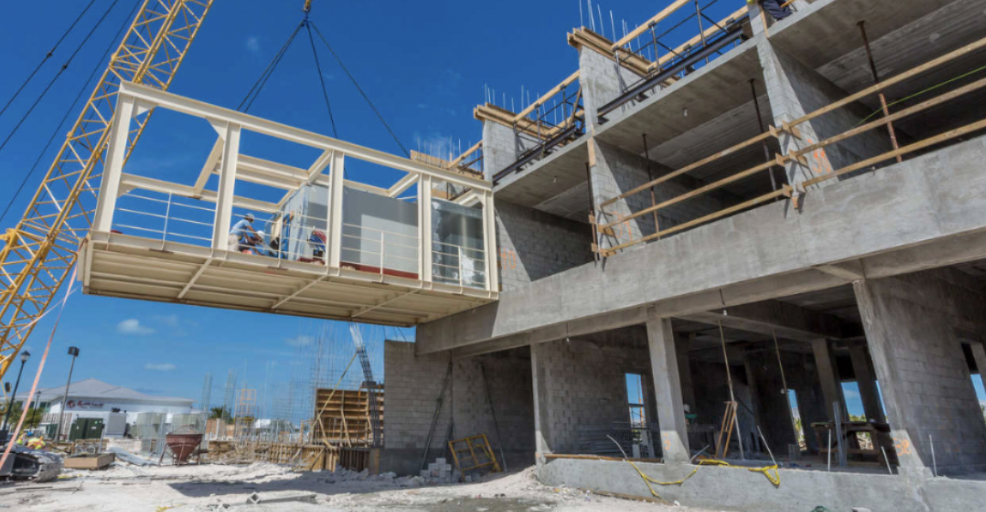
One of the most significant advantages of modular and prefab construction is the reduction in construction time. Traditional block construction is often subject to delays due to weather conditions, labor shortages, and other on-site issues. In contrast, modular and prefab construction involves assembling building components in a controlled factory environment. This process can occur simultaneously with site preparation, leading to a much faster overall construction timeline.
Factory-Based Construction
In modular and prefab construction, most of the work is done in a factory setting. This controlled environment allows for continuous work, regardless of weather conditions. As a result, the construction timeline can be reduced by up to 50% compared to traditional methods. This time efficiency not only speeds up project delivery but also reduces the cost associated with prolonged construction periods.
Simultaneous Site Preparation
While the modules are being constructed in the factory, the site can be prepared concurrently. This parallel approach further shortens the project timeline. By the time the modules are ready, the site is also prepared for installation, eliminating the lag time between different phases of construction typical in block construction.
Cost Effectiveness
Cost is a critical factor in any construction project. Modular and prefab construction offer significant cost savings compared to traditional block construction. These savings are realized through various aspects of the construction process.
Reduced Labor Costs
The factory-based approach of modular and prefab construction minimizes the need for a large on-site labor force. Skilled labor is concentrated in the factory, where efficiency and productivity are maximized. This reduction in on-site labor not only cuts costs but also reduces the risk of labor-related delays and issues.
Economies of Scale
Modular and prefab construction benefit from economies of scale. Factories can produce components in bulk, reducing material costs and waste. Standardized processes and bulk purchasing of materials lead to lower per-unit costs, making modular and prefab construction more economical.
Superior Quality Control
Quality control is a crucial aspect of any construction project. In traditional block construction, quality can vary significantly depending on site conditions and the skills of the labor force. Modular and prefab construction offer a more consistent and controlled approach to quality.
Controlled Environment
Constructing modules in a factory setting allows for stringent quality control measures. Every component is built to precise specifications, and quality checks are conducted at each stage of production. This controlled environment ensures that each module meets the highest standards of quality and durability.
Precision Engineering
Modular and prefab construction rely on advanced engineering and manufacturing techniques. Computer-aided design (CAD) and computer-aided manufacturing (CAM) technologies ensure that each component is built with precision. This level of accuracy is challenging to achieve in traditional block construction, where on-site conditions can lead to variations and imperfections.
Sustainability and Environmental Impact
Sustainability is a growing concern in the construction industry. Modular and prefab construction offer several environmental benefits compared to traditional block construction.
Reduced Waste
Factory-based construction generates less waste than on-site construction. Precise measurements and cutting techniques minimize material waste, and leftover materials can often be reused or recycled. This reduction in waste contributes to a more sustainable construction process.
Energy Efficiency
Modules are constructed in a controlled environment, reducing the energy consumption associated with on-site construction activities. Additionally, modular buildings are often designed with energy-efficient features, such as enhanced insulation and advanced HVAC systems, leading to lower energy consumption over the building’s lifespan.
Flexibility and Scalability
Modular and prefab construction offer unparalleled flexibility and scalability, making them ideal for various types of projects, from residential buildings to large commercial complexes.
Design Flexibility
Modular construction allows for a high degree of customization and design flexibility. Modules can be designed to meet specific architectural requirements and can be easily modified or expanded in the future. This flexibility is particularly advantageous for projects that may need to adapt to changing needs over time.
Scalability
Modular construction is highly scalable, making it suitable for projects of any size. Whether you are building a single-family home or a multi-story office building, modular construction can be scaled to meet the project’s requirements. This scalability also makes modular construction an excellent choice for phased developments, where additional modules can be added as needed.
In conclusion, modular and prefab construction offer numerous advantages over traditional block construction. The time efficiency, cost savings, superior quality control, sustainability, and flexibility make modular and prefab construction the preferred choice for many builders and developers. By choosing a company like Blok Modular Constructors, you can leverage these benefits to ensure your next construction project is completed on time, within budget, and to the highest standards of quality. With their expertise and commitment to excellence, Blok Modular Constructors can help you achieve your construction goals more efficiently and effectively than ever before.